

Finishing 12th grade can feel exciting and confusing at the same time. Many students know they want a successful career, but they are unsure which path to choose. Traditional degree programs are still popular, but skill-based careers are growing faster than ever.
If you’re wondering, “Can I do a digital marketing course after 12th?”, the answer is yes.
Digital marketing is one of the few career fields where your skills matter more than your academic background. Whether you come from science, commerce, or arts, you can start learning digital marketing right after 12th and build valuable career skills.
In this guide, you’ll learn about digital marketing course eligibility, career opportunities, skills you’ll learn, the role of AI in marketing, and how to start your journey successfully.
What Students Need to Know
Yes, you can do a digital marketing course after 12th. Most beginner-level digital marketing courses in India accept students who have finished their higher secondary education (10+2). You do not need a college degree, coding knowledge, or prior marketing experience to get started.
Digital marketing is a skill-based field. Companies look for people who can create campaigns, generate leads, improve website visibility, and analyze results.
Students from all streams can join:
- Science students
- Commerce students
- Arts students
- Diploma holders
One of the biggest advantages is that you can start learning while pursuing a college degree or even before entering college.
Who Can Join a Digital Marketing Course?
Anyone with:
- 12th pass qualification
- Basic computer knowledge
- Internet access
- Interest in learning digital skills
That’s usually enough to begin.
Do You Need a College Degree?
No, Many successful digital marketers started by learning practical skills before earning a degree. Employers often value portfolios, certifications, and real project experience more than academic qualifications alone.
What Is the Eligibility for a Digital Marketing Course?
Digital marketing course eligibility is simple. Most institutes require students to have completed 12th grade and possess basic computer literacy. There are generally no stream restrictions or advanced technical requirements.
Here’s a quick overview:
| Requirement | Needed? |
| 12th Pass | Yes |
| College Degree | No |
| Coding Knowledge | No |
| Marketing Experience | No |
| Computer Basics | Recommended |
Students often assume digital marketing is only for commerce students. That is a common myth.
In reality:
- Science students often excel in analytics.
- Commerce students understand business concepts.
- Arts students frequently perform well in content creation and communication.
Every stream brings unique strengths.
Why Is Digital Marketing a Good Career Choice After 12th?
Digital marketing is a strong career option after 12th because it offers practical skills, growing job demand, freelancing opportunities, remote work options, and multiple career paths across industries.
Today, nearly every business needs an online presence.
Companies use:
- Search engines
- Social media
- Websites
- Email campaigns
- Paid advertising
This creates demand for skilled digital marketers.
Benefits of Learning Digital Marketing Early
Starting after 12th gives you a head start.
You can:
- Build skills before graduation
- Gain internship experience early
- Start freelancing
- Create a professional portfolio
- Understand real business marketing
Many students wait until after college to build practical skills. Those who start earlier often have an advantage in the job market.
Can You Earn While Learning?
Yes, Many learners begin with:
- Freelance projects
- Social media management
- Content writing
- SEO assistance
- Basic advertising tasks
Even small projects help build confidence and experience.
What Skills Will You Learn in a Digital Marketing Course?
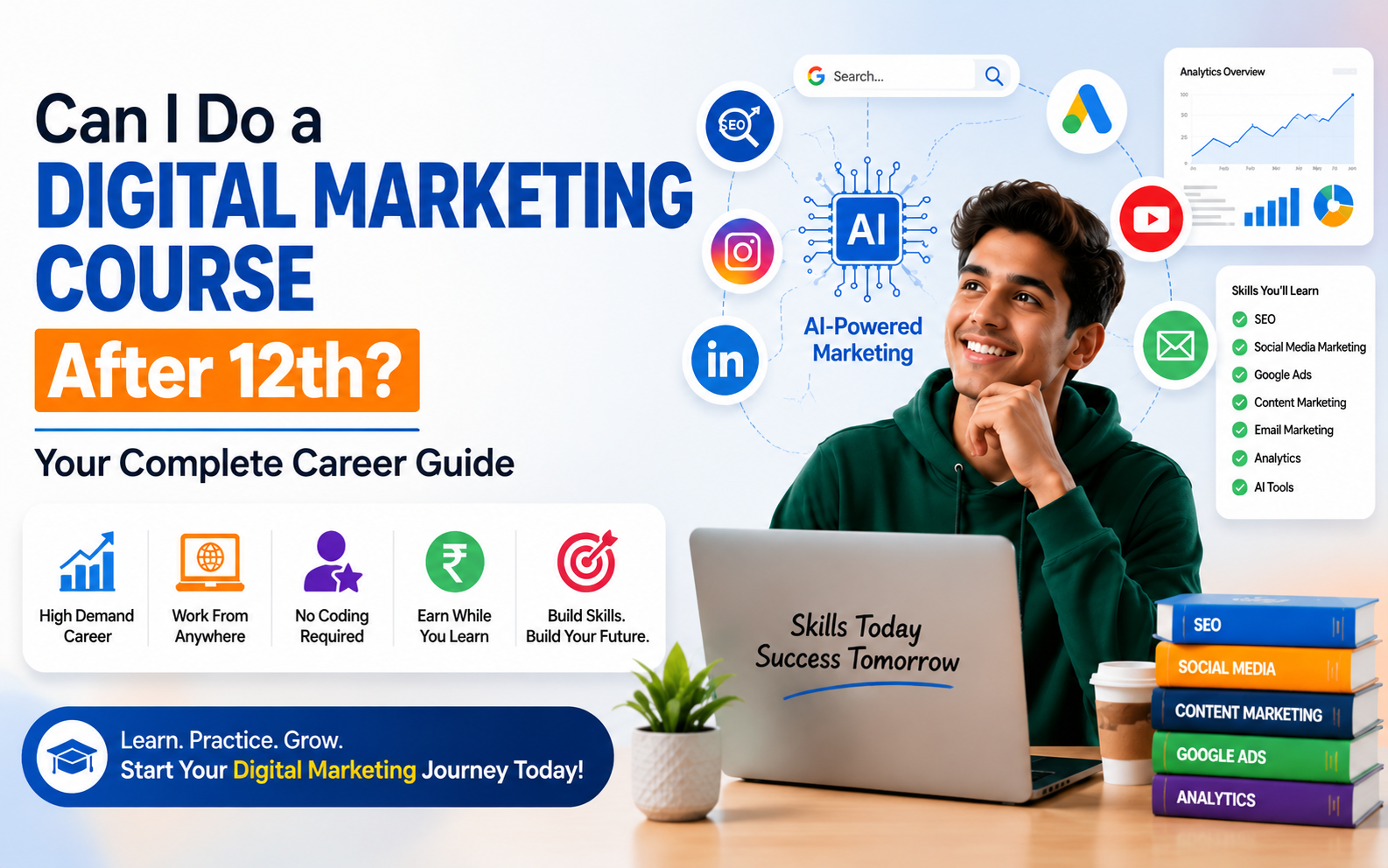
A digital marketing course teaches students how to attract, engage, and convert customers online using platforms such as Google, social media, websites, email, and AI-powered marketing tools.
Key skills include:
| Skill | Career Use |
| SEO | Improve website rankings |
| Social Media Marketing | Grow brand visibility |
| Google Ads | Generate leads and sales |
| Content Marketing | Attract audiences |
| Email Marketing | Nurture customers |
| Analytics | Measure performance |
SEO Fundamentals
Search Engine Optimization (SEO) helps websites appear higher on Google search results.
You’ll learn:
- Keyword research
- On-page SEO
- Technical SEO basics
- Content optimization
Social Media Marketing
Students learn how to manage platforms like:
- YouTube
Google Ads and Performance Marketing
Performance marketing focuses on measurable results such as leads, clicks, and conversions.
This is one of the most in-demand skills today.
AI-Powered Marketing Tools
Modern digital marketers increasingly use AI tools to:
- Generate content ideas
- Research keywords
- Analyze campaigns
- Improve productivity
This is where advanced digital marketing training is evolving rapidly.
How Can AI Help You Become a Better Digital Marketer?
AI helps digital marketers work faster, make smarter decisions, automate repetitive tasks, and improve campaign performance. AI supports marketers rather than replacing them.
Many students worry:
Will AI Replace Digital Marketers?
The answer is no.
AI can create content suggestions and automate processes, but businesses still need human creativity, strategy, and decision-making.
As a trainer at Webipher, Balvin Kaur has observed that students who learn both marketing fundamentals and AI tools often adapt faster to industry changes than those who rely only on traditional methods.
AI Skills Students Should Learn
Useful AI skills include:
- Prompt writing
- AI content generation
- Marketing automation
- AI-assisted SEO
- Campaign optimization
These skills are becoming increasingly valuable in today’s job market.
What Career Opportunities Are Available After a Digital Marketing Course?
After completing a digital marketing course, students can pursue entry-level jobs, internships, freelancing opportunities, or even start their own online businesses.
Popular career paths include:
| Role | Level |
| SEO Executive | Beginner |
| Social Media Executive | Beginner |
| Content Marketer | Beginner |
| Digital Marketing Executive | Beginner |
| Performance Marketer | Intermediate |
| Digital Marketing Specialist | Advanced |
Freelancing Opportunities
Many businesses need help with:
- Social media management
- SEO
- Content creation
- Paid advertising
This creates opportunities for students to earn independently.
Entrepreneurship Opportunities
Digital marketing skills are valuable even if you plan to launch your own business someday.
Knowing how to attract customers online can save significant marketing costs.
Digital Marketing vs Traditional Degree Courses
Digital marketing and traditional degree programs serve different purposes. A degree provides academic knowledge, while digital marketing focuses on practical, job-ready skills.
| Factor | Traditional Degree | Digital Marketing |
| Learning Style | Theory-focused | Practical |
| Skill Development | Moderate | High |
| Industry Exposure | Limited | Strong |
| Portfolio Building | Limited | Essential |
| Freelancing Potential | Low | High |
Many students choose both.
For example:
- B.Com + Digital Marketing
- BBA + Digital Marketing
- BA + Digital Marketing
This combination often creates stronger career opportunities.
How to Start Your Digital Marketing Journey After 12th
Students can start digital marketing by learning the fundamentals, practicing on real projects, building a portfolio, gaining experience, and continuously upgrading their skills.
Follow this roadmap:
- Learn digital marketing fundamentals.
- Practice on personal projects.
- Create a simple portfolio.
- Complete internships.
- Apply for jobs or freelance work.
The biggest mistake beginners make is focusing only on certificates. Employers usually care more about what you can actually do.
Why Learn Digital Marketing with Webipher?
Webipher is a leading Digital Marketing and IT Training Institute in Amritsar that focuses on practical learning and industry-relevant skills.
Students benefit from:
- AI-powered digital marketing training
- Hands-on project experience
- Performance marketing exposure
- Generative AI tool training
- Industry-focused curriculum
Under the guidance of trainers like Balvin Kaur, learners gain practical experience rather than just theoretical knowledge.
The goal is simple, help students become confident, job-ready digital marketers.
Frequently Asked Questions
Can I do a digital marketing course after 12th?
Yes, Most digital marketing courses in India accept students who have completed 12th grade and have basic computer knowledge.
Is digital marketing a good career after 12th?
Yes, Digital marketing offers strong career growth, flexible work opportunities, freelancing potential, and demand across industries.
Do I need coding knowledge for digital marketing?
No, Coding is not mandatory for most digital marketing roles, although basic technical knowledge can be helpful.
Can science students learn digital marketing?
Absolutely. Science students, commerce students, and arts students can all succeed in digital marketing.
Can I earn while learning digital marketing?
Yes, Many students begin with internships, freelance projects, content writing, social media management, or SEO support work while learning.
Is AI replacing digital marketers?
No, AI is a tool that helps marketers work more efficiently. Human creativity, strategy, and communication remain essential.
Conclusion
If you’ve completed 12th grade and are exploring career options, digital marketing is worth serious consideration. It is accessible, practical, future-focused, and open to students from every academic background.
The best part is that you do not need to wait for a college degree to start building valuable skills. You can begin learning, practicing, and gaining experience today.
If you’re looking for structured, hands-on learning, an AI-powered advanced digital marketing course can help you understand modern marketing, AI tools, performance campaigns, and real-world business applications—giving you a strong foundation for future career growth.